
AIA Canada is honoured to present:
Webinar | Beyond Net Zero: New Design Imperatives for Vibrant Community Buildings
Presented by Paul Fast of hcma architecture + design
Recipient of the 2024 AIA Canada Design Award for Excellence in Architecture
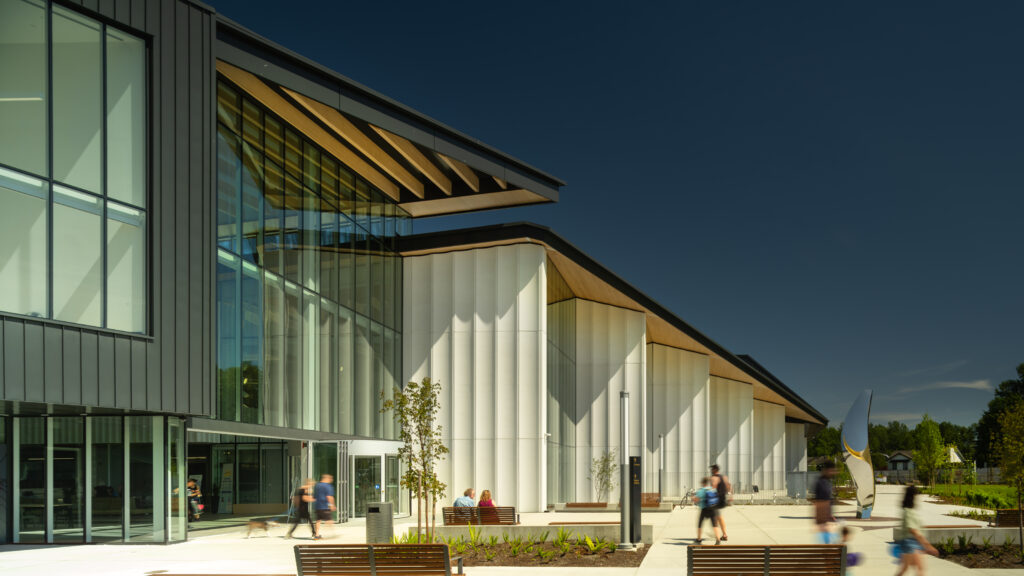
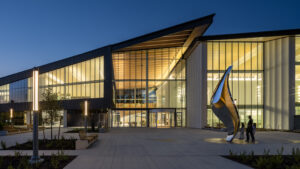
Project | təməsew̓txw Aquatic and Community Centre, New Westminster, British Columbia
Wednesday, October 1, 12:00 – 1:00 pm ET
CES: 1 AIA LU | HSW
Course Number: 2025AIACS12
Provider Name: AIA Canada Society
Provider Number: 100100113
Course Description
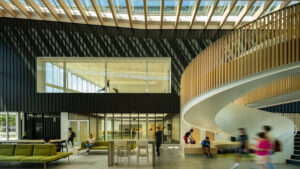
Community recreation facilities – especially those with aquatics programming – are some of the municipal building portfolio’s costliest assets: to build, to operate, and from a greenhouse gas emissions standpoint. Yet, the social value of these buildings is critical. They help combat loneliness, promote health and wellness, foster collective pride, provide meaningful access and inclusion, and act as safe havens in the face of natural disasters. Join Paul Fast of hcma architecture + design as he challenges the industry to think differently. Sharing new imperatives for community recreation building design, he’ll highlight the importance of holistic and generational thinking to meet society’s complex and rapidly evolving needs. He’ll share lessons from the award-winning, all-electric təməsew ̓ txʷ Aquatic and Community Centre – the first completed aquatic centre certified under Canada Green Building Council’s Zero Carbon Building – Design Standard.
As a case study, təməsew ̓ txʷ is a model for how thoughtful design can create an environment that supports and enhances human health, wellbeing, and community connection.
Demonstrating this imperative, təməsew ̓ txʷ’s gravity-fed InBlue pool filtration and disinfection system—the first of its kind in North America—has made a significant impact on patron experience. InBlue uses a drum filter system, which minimizes pump energy consumption by almost 50% and reduces the need for chlorine usage and creation of associated harmful byproducts, resulting in much improved air and water quality for swimmers. Other elements, like biophilic design, abundant natural light, low VOC finishes, additional handrails for safety, and transfer-ledges and ramps into pools all underscore how both environmental and social performance contribute to overall building performance. Reframing sustainability as more than just a carbon accounting exercise, Paul will demonstrate a holistic approach that reflects current climate science and embraces the importance of the human experience.
Learning Objectives
- Explain how new approaches to community recreation centre design can support ambitious environmental and social impact goals.
- Describe the role of community recreation centres within municipal building portfolios and their influence on a municipality’s climate response.
- Identify strategies for achieving Net Zero emissions in energy-intensive community recreation and aquatics facilities.
- Discuss how community recreation centres contribute to resilience and wellbeing within the communities they serve.
Presenter:

“Architecture is inherently philosophical and yet relentlessly pragmatic. Somewhere in the middle, it defines how we work, play, and find delight in this world. That’s the good stuff.”
Paul is interested in creating architecture that helps to define a strong regional identity. His work is focused on reconnecting people to their environments through the considered use of material, form, space, and light.
As a Principal, Paul enjoys the initial stages of concept design when site, user, and program are defined. His careful consideration of these critical decisions helps shape the outcome of the design and building process. Paul believes transformative change can happen at any scale, and has led projects ranging from a children’s playhouse to a complex, $160M community recreation centre. Paul finds particular delight in discovering and working in new communities throughout the province (big and small).
He has led several of our Tilt initiatives including the IDSwest stage design, Coal Harbour Deck concept and the #MoreAwesomeNow Laneway Activation.
Paul holds a Bachelor of Arts in Geography and a Masters of Architecture from the University of British Columbia and gained experience abroad in Switzerland and Russia, where he designed an orphanage for a non-profit group. When not architecting, he can be found exploring the remotest regions of British Columbia, or hanging out at the cabin with his wife and three boys.